Competing in the heat is among the most physiologically demanding scenarios an endurance athlete will face. Performance declines sharply once ambient temperatures exceed 25 °C, and the mechanisms behind that decline (elevated cardiovascular strain, accelerated dehydration, rising core body temperature) are well established. Less widely recognised is that the body can be systematically prepared for these conditions. That preparation is called heat acclimation (HA), and the evidence supporting it is substantial.
This article draws on a 2019 priority review by Pryor, Johnson, Roberts, and Pryor published in the journal Temperature, which aimed to translate the existing evidence into practical implementation strategies for individual and team sport athletes. A central finding of that review is that HA is widely underused. Prior to the 2015 IAAF World Athletics Championships, fewer than 15% of competing athletes arrived heat acclimated, despite weather forecasts indicating temperatures of 26–33 °C with 73% relative humidity.
Key Takeaways
HA can improve time trial performance by ~7% and time-to-exhaustion by ~23% in hot conditions.
10 consecutive days of 90-minute exercise sessions in ≥30 °C is the standard starting point for a full acclimation protocol.
Adaptations begin to decay within two weeks of stopping heat exposure. Timing relative to the target race should be planned accordingly.
Sauna bathing and hot water immersion are evidence-supported alternatives when access to a hot training environment is not feasible.
Re-acclimation requires only 2–4 days, allowing HA to be completed well before competition and supplemented with a short exposure block close to race day.
Physiological effects of heat acclimation
HA does not merely reduce thermal discomfort. It drives a range of measurable physiological adaptations with direct performance benefits.
A meta-analysis of 96 studies found that time-to-exhaustion improved by up to ~23% and time trial performance by ~7% following a heat acclimation protocol. The mechanisms driving these gains include a ~6% increase in VO₂max, a lower lactate threshold (~1.0 mmol/kg lower), improved movement economy (~2.5%), and enhanced whole-body thermotolerance.
At the cardiovascular level, resting and exercising heart rate both decrease, while stroke volume increases. Core body temperature at rest and during exercise drops, meaning the same workload now generates less thermal stress. Sweat responses become more sensitive and more effective: the athlete starts sweating earlier, sweats more, and the sodium concentration of that sweat decreases, improving fluid-electrolyte retention.
A further benefit worth noting: HA may also improve aerobic performance in cooler conditions by up to 6%, and there is no evidence that it impairs performance in temperate environments. Incorporating HA into an annual training plan carries no meaningful performance risk for athletes competing across varied conditions.
Designing a heat acclimation protocol
There is no single protocol that produces optimal adaptations in every athlete, but the research points to clear starting parameters that can be adjusted based on individual circumstances.
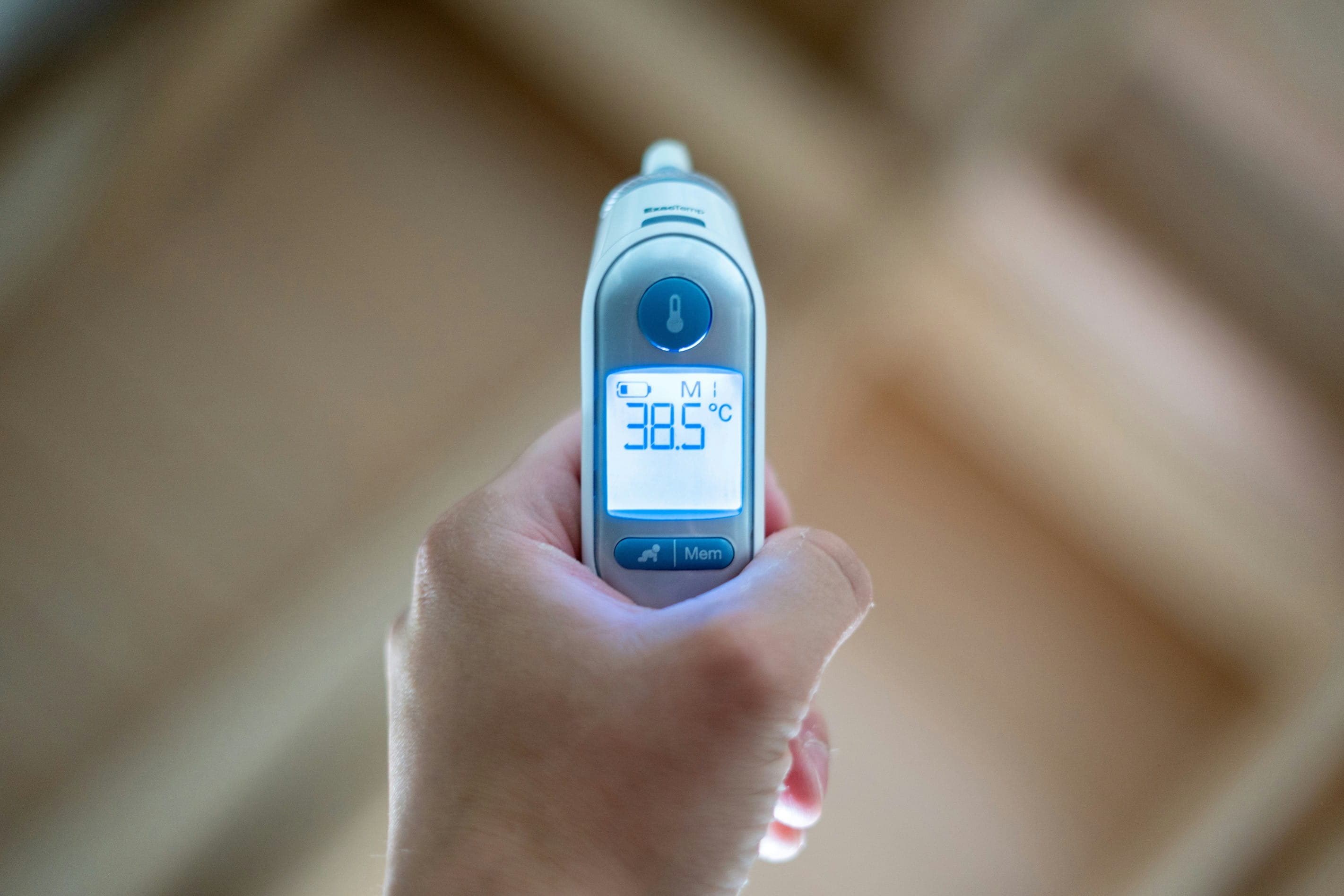
The baseline recommendation is 10 consecutive days of exercise for 90 minutes in a wet-bulb globe temperature of ≥30 °C. The physiological target during each session is elevating core temperature to at least 38.5 °C and sustaining it there for around 60 minutes.
Exercise intensity and duration
Well-trained athletes running 30–35 minutes per day at 75% VO₂max achieve similar adaptation to those walking 60 minutes at 50% VO₂max. Sessions should progress toward 60–90 minutes in duration. From the third day onward, intensity can increase progressively as initial adaptations take hold.
Protocol length
Trained athletes adapt within 5–7 days, but protocols of 8–14 days produce more effective and longer-lasting adaptations. Less trained athletes and those preparing for multi-day events benefit from longer protocols.
Frequency
Daily consecutive exposure is ideal. Multiple sessions per day provides no additional benefit. Missing 1–3 days within a 10–14 day block will not significantly impede progress.
Environment
The training environment should match or slightly exceed the anticipated competition environment. Athletes without access to a hot climate can simulate conditions using space heaters, training at the hottest time of day, or layering clothing.
When heat training is not logistically feasible
Access to a warm climate or environmental chamber is not always available. Several evidence-supported alternatives exist.
Sauna bathing is one of the most accessible passive methods. In trained men, daily post-exercise sauna sessions (80–100 °C, 10–20% relative humidity) over 2–3 weeks increased plasma volume by 7–18% and time to exhaustion by 32%.
Hot water immersion (30–60 minutes at 40–44 °C) is another well-documented option. Studies using hot water immersion on alternating days over 2–3 weeks produced HA adaptations comparable to around five days of traditional heat training.
A combined approach involves 30 minutes of exercise in the heat sufficient to raise core temperature to approximately 38.5 °C, followed immediately by 30–60 minutes of hot water immersion or sauna exposure. This delivers both exercise-specific and thermal adaptive stimuli while limiting overall training volume.
Adaptation decay and maintenance
Heat adaptations begin to decay within weeks of stopping heat exposure.
Without continued heat exposure, full HA is typically lost within a month. After two weeks without heat stress, exercising heart rate, sweat rate, and core temperature are expected to decay by approximately 35%, 30%, and 6% respectively.
Intermittent exercise-heat exposure can sustain adaptations for extended periods. A single 120-minute exercise-heat session every five days was sufficient to maintain heart rate and core temperature adaptations for a full month following initial HA.
Re-acclimation is rapid. Returning to post-HA levels requires only 2–4 consecutive days of exercise-heat exposure within 2–4 weeks of the initial block. This allows HA to be completed well before competition, with a short re-acclimation block applied close to race day, including at the venue itself.
Nutrition and hydration during heat acclimation
Heat training increases metabolic and fluid demands, both of which require deliberate management.
Muscle glycogen depletes more rapidly in the heat. A carbohydrate intake of 6–10 g/kg/day is recommended, with 30–60 g per hour during exercise lasting 1–2.5 hours. A sodium intake of 1.5–3.2 g per day is generally sufficient to maintain fluid-electrolyte balance, with higher intakes appropriate for heavy sweaters or athletes prone to cramping.
Athletes should aim to match fluid intake to sweat rate during exercise, and replace up to 150% of exercise-related body mass losses before the next session.
Safety: what to check before every heat session
Heat training carries meaningful physiological risks when precautions are not observed. The following criteria should be confirmed before each session:
Cold-water immersion equipment is available close to all athletes.
Signs and symptoms of exertional heat illness are posted and visible.
Someone is assigned to monitor environmental conditions throughout the session.
The athlete's bodyweight has changed by less than 1% since the previous day.
The athlete has had more than 6 hours of sleep in a cool environment.
The athlete has avoided thermogenic supplements in the last 6 hours.
The athlete is free of fever, flu, or digestive symptoms in the past 24 hours.
If the answer to any of these is "no," postpone the session for that individual or the full group.
Implementation
Heat acclimation is straightforward to implement when planned sufficiently in advance of competition.
Target races in warm conditions should be identified early, with the HA block scheduled to conclude 1–3 weeks before race day. Where access to a hot environment is not available, sauna bathing combined with layered outdoor training represents a valid alternative. Following initial acclimation, a 30–120 minute heat exposure every four to five days is sufficient to sustain most adaptations, with a 2–4 day re-acclimation block in the final week if needed.
Adaptation can be confirmed by monitoring a consistent set of physiological markers: declining heart rate at the same relative effort in the heat, reduced perceived exertion, earlier onset of sweating, and improved performance on standardised sessions. When these indicators plateau, full acclimation has been achieved. The resulting adaptations confer a measurable advantage when competition conditions place less-prepared athletes under heat stress.
References
Pryor, J.L., Johnson, E.C., Roberts, W.O. and Pryor, R.R. (2019) "Application of evidence-based recommendations for heat acclimation: Individual and team sport perspectives", Temperature, 6(1), pp. 37–49.